A damp basement creates persistent problems: musty odors, mold growth, and damage to stored belongings and building materials. This article explains why professional dehumidifier installation for basements is a practical moisture-control solution that protects health, preserves structure, and improves indoor air quality. You will learn how humidity drives mold and mildew, which dehumidifier types fit different basement scenarios, what a professional installation process looks like, and how to budget for equipment and service. The guidance emphasizes measurable targets (relative humidity targets, drainage options, and maintenance routines) and presents clear steps to select and maintain systems — from portable units to whole-house or ducted dehumidifiers. Throughout, the content integrates local service considerations and selective company information so you can move from diagnosis to a reliable solution quickly.
Professional basement dehumidifier installation reduces airborne mold spores and brings relative humidity into a controlled band, which in turn protects building materials and occupant health. A correctly sized unit stabilizes basement relative humidity in the recommended 30–50% range by removing excess moisture through a compressor, evaporator coil, and condensate removal system. Installing a dehumidifier professionally also ensures appropriate drainage, electrical supply, and airflow patterns so the unit runs efficiently and avoids short cycling. These technical controls deliver energy savings compared with overworking home HVAC systems, while increasing usable basement space by preventing mustiness and condensation. The next paragraphs break down the key mechanisms and direct benefits so you can compare claims and outcomes.
Professional dehumidification delivers several measurable outcomes tied to moisture-control mechanisms.
These benefits translate into fewer remediation events and longer material life; understanding the specific mechanisms helps when selecting equipment and a qualified installer.
This comparison clarifies why mechanism, not just unit power, determines long-term outcomes and why professional assessment matters for reliable performance.
Professional installation prevents mold and mildew by targeting relative humidity (RH) and eliminating microclimates where spores thrive. Technically, maintaining RH in the 30–50% band inhibits mold reproduction because spores need moisture to germinate; a properly sized dehumidifier with adequate airflow reduces stagnant pockets and surface condensation. Installers ensure correct placement to move warm and cool air across exposed surfaces and prevent cold-wall condensation, while sealed drain lines or condensate pumps manage continuous water removal. Continuous monitoring — via humidity sensors and periodic checks — confirms the system keeps RH within the target range and flags performance drops for timely service.
Ensuring airflow and drainage reduces the chance of local saturation and helps preserve finishes, which leads into how dehumidification improves overall air quality in the basement environment.
Dehumidification improves basement air quality by reducing the environmental supports that allow allergens and microbial VOCs to flourish. Lower relative humidity directly suppresses dust mite populations and reduces fungal spore concentrations in the air, which commonly trigger respiratory symptoms and worsen asthma. Removing moisture also diminishes musty odors tied to microbial growth and can limit off-gassing from damp materials, improving perceived indoor air quality. When paired with filtration and ventilation strategies, dehumidification produces measurable reductions in common basement pollutants, creating a healthier environment for occupants and stored items.
Reducing humidity’s amplifying effect on allergens naturally raises the question of how basement humidity affects home health and structural integrity, which the next section addresses.
Basement humidity influences both occupant health and the physical condition of the home by creating an environment conducive to biological growth and material degradation. High RH fosters mold, mildew, and dust mites that increase allergy and asthma triggers; persistent dampness can also elevate levels of musty VOCs, which irritate airways. Structurally, excess moisture accelerates wood rot, corrodes metal fasteners, and contributes to masonry efflorescence and spalling that degrade foundations over time. Property damage can include warped flooring, rusted appliances, and ruined stored goods — all of which raise repair costs and reduce indoor comfort.
Understanding causes and consequences helps prioritize interventions like dehumidification and waterproofing to prevent escalating damage and health risks.
Diagnosing moisture sources also clarifies how prolonged humidity leads to specific structural failures and long-term cost impacts.
Soil vapor and groundwater infiltration are primary sources of basement moisture when hydrostatic pressure forces water through foundations or cracks. Condensation appears when warm humid air contacts cooler basement surfaces, producing surface moisture that supports microbial growth over time. Plumbing leaks, poor guttering, and inadequate exterior drainage also contribute to chronic dampness by adding liquid water that overwhelms passive drying. Detecting these causes requires visual inspection, moisture mapping, and simple tools like hygrometers and moisture meters to separate environmental humidity from active leaks.
Finding the root cause helps prioritize fixes such asimproving drainage or repairing leaks before relying solely on dehumidification.
Excess humidity accelerates wood decay because fungal organisms digest cellulose in damp framing, leading to joist rot and compromised load-bearing components. Concrete and masonry suffer from efflorescence and spalling as salts migrate with moisture and crystallize on surfaces, weakening finishes and mortar joints. Metal components corrode faster in humid environments, potentially damaging mechanical systems and fasteners. Over time, these degradation pathways increase repair scope and costs, making early moisture-control investments like dehumidifiers and waterproofing far more cost-effective than reactive remediation.
Recognizing these failure mechanisms underscores why a combined approach—diagnosis, drainage, and professional dehumidification—is the most durable solution.
Selecting the right dehumidifier depends on basement size, moisture load, and integration requirements; common options include portable basement dehumidifiers, whole-house dehumidifiers, and ducted or sump-pump-connected units for continuous operation. Portable units are useful for small, intermittently damp spaces and require periodic emptying or a gravity drain; whole-house or ducted systems integrate with HVAC to provide continuous moisture control across conditioned spaces. High-capacity ducted dehumidifiers or units that connect to a sump pump are preferable for basements with heavy moisture loads or finished living areas, as they support continuous drainage and lower maintenance.
This clarifies trade-offs and why capacity and drainage capabilities determine long-term suitability for basements.
Whole-house dehumidifiers are designed for continuous operation and integrate into HVAC ductwork to control humidity across multiple zones, offering higher capacity and lower relative maintenance. Portable dehumidifiers are self-contained, require less installation, and are suitable for spot treatment or smaller basements but often have limited capacity and need manual attention or a gravity drain. Whole-house systems typically include larger compressors, evaporator coils, and hardwired condensate management, providing quieter and more energy-efficient operation in the long term. Choosing between them depends on moisture load, whether the basement is finished or unfinished, and whether you want a set-and-forget solution that integrates with your home’s mechanical systems.
Given these differences, a professional load assessment often identifies scenarios where a ducted or sump-connected system avoids repeated service calls and delivers more stable RH control.
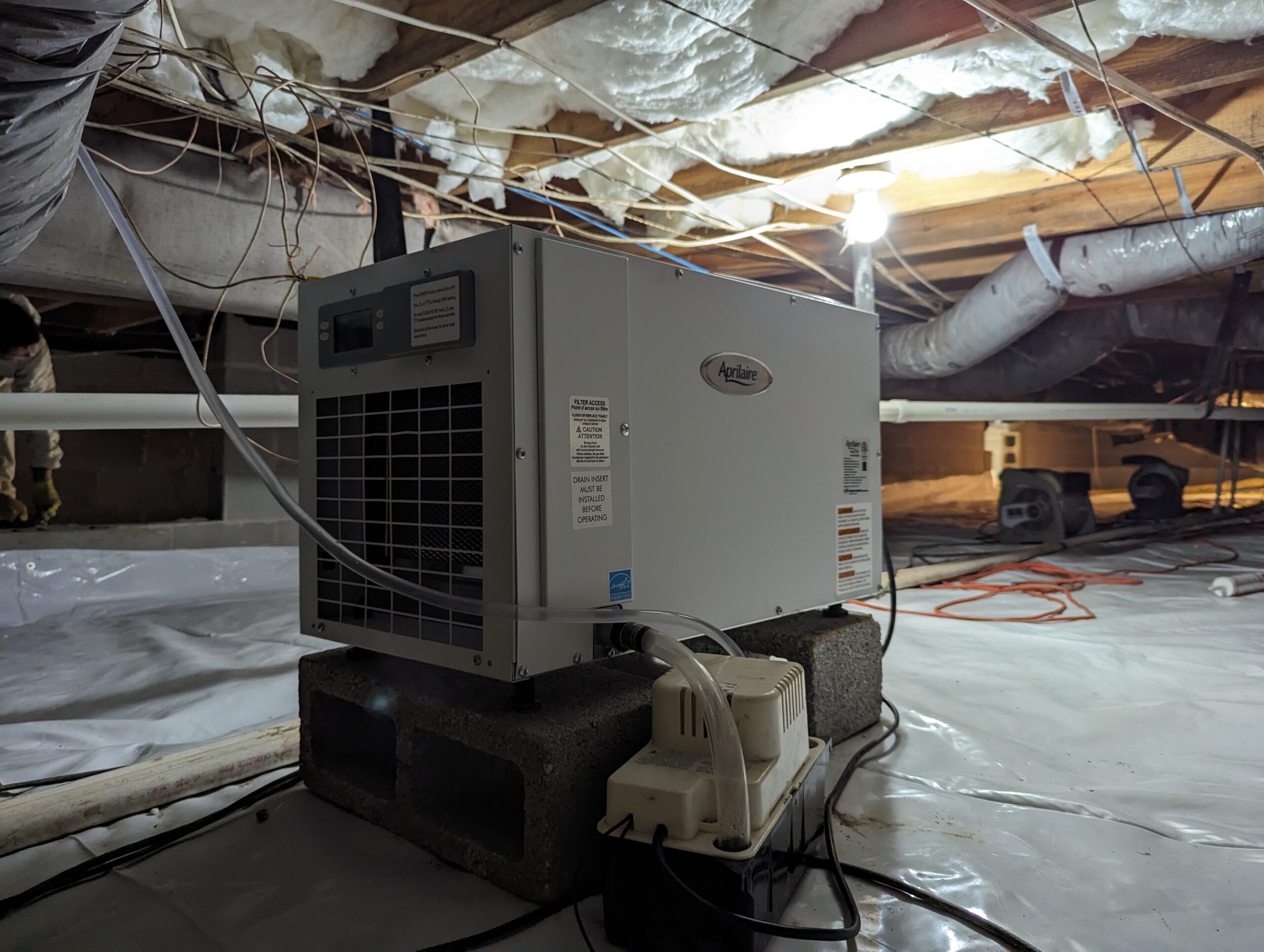
A professional installation process starts with a comprehensive assessment — moisture mapping, RH measurements, and load calculations — and proceeds through equipment selection, placement, drainage and electrical setup, and commissioning. Technicians evaluate air exchange, temperature differentials, and adjacent systems (sump pumps, floor drains, HVAC) to determine optimal unit type and location for uniform airflow and minimal noise. Proper installation includes secure drain connections (to floor drains, sump pumps, or condensate pumps), dedicated electrical circuits when needed, and commissioning tests to verify runtime, humidity control, and sensor accuracy. Clear documentation and recommendations for maintenance complete the service so homeowners know what to monitor and when to request follow-up.
A stepwise view of the installation process makes expectations clear and prepares homeowners for the operational phase after equipment is commissioned.
What Steps Does Vance Insulation Take During Installation? Vance Insulation & DryGuard Systems approaches installations with a site-first methodology: technicians perform moisture diagnostics and mapping to identify infiltration, condensation zones, and interactions with existing waterproofing or sump equipment. They recommend a professionally sized unit based on measured load and suggest integration with crawl-space or basement waterproofing and encapsulation services when appropriate to address root causes. Installation includes secure drain connections, electrical checks, and commissioning to confirm the unit maintains target RH and operates without short-cycling. The company also notes available protections such as a manufacturer warranty and offers free estimates to help homeowners plan an integrated moisture-control solution.
Routine maintenance keeps capacity high, prevents leaks, and extends service life; a simple schedule combined with occasional professional checks is the most cost-effective approach. Monthly tasks include cleaning or replacing air filters, checking condensate lines for blockages, and verifying drain connections are secure. Quarterly checks should inspect coils for frost accumulation (auto-defrost operation), confirm pump function if present, and log humidity readings to ensure the unit meets set points. Annual service often includes a deeper inspection of compressor operation, refrigerant checks if applicable, and confirmation that controls and sensors remain calibrated — all of which maintain efficiency and warranty compliance.
Following a consistent maintenance rhythm reduces emergency repairs and ensures continuous mold prevention, which connects to specific homeowner actions and red flags for professional service.
Essential maintenance includes keeping the air intake clear of dust and debris, cleaning filters on the schedule recommended by the manufacturer, and flushing condensate lines if slow drainage is detected. Monitor humidity trends with a hygrometer and log readings weekly to spot declining capacity, and listen for unusual noises that indicate mechanical wear. Ensure auto-defrost and drainage features function during colder months when condensation behavior changes, and keep the area around the unit clear to maintain proper airflow. Documenting maintenance actions and preserving receipts supports warranty claims if repairs are needed.
Consistent homeowner maintenance reduces failure risk and clarifies when professional intervention becomes necessary.
Call a professional when the unit fails to maintain target RH despite cleaned filters and clear drains, when you hear grinding or rattling noises that suggest mechanical failure, or if there are persistent leaks around the unit. Repeated short-cycling, a sudden drop in moisture removal, or electrical tripping indicate components like compressors or control boards may be failing and require professional diagnosis. Age-based replacement becomes prudent when repair costs exceed the value of a newer, more efficient model or when warranty coverage has lapsed; professionals can provide a cost-benefit analysis that accounts for improved efficiency and long-term performance. Scheduling proactive inspections before high-humidity seasons prevents emergency failures and preserves indoor air quality.
For homeowners ready to act on persistent basement humidity, a free professional estimate and financing options can make comprehensive solutions achievable without delay.
For personalized guidance or a no-cost estimate from a local installer, consider reaching out to Vance Insulation & DryGuard Systems to discuss site assessment, available warranty coverage, and any military or first-responder discounts. Their diagnostic-first process connects dehumidification with waterproofing and crawl-space services to deliver a durable moisture-control outcome.
Address: 3922 Puddledock Rd, Prince George, VA 23875
Phone:804-862-4493
Business Hours:
Mon - Fri: 7:00 AM to 6:30 PM
Sat-Sun: Closed
GreenSky Financing
5% off Military, Veteran, First Responders