
Buying a brand-new home in Jordan on the James or Prince George Estates should mean stepping into comfort from day one. Unfortunately, we often hear from homeowners who notice uneven temperatures, drafty rooms, or energy bills that seem higher than expected. In many cases, the attic plays a bigger role than most people realize.
Even in new construction, attic insulation can fall short. Gaps in coverage, low insulation levels, or missed air leaks can turn the attic into a space where heat and humidity move freely. When that happens, the rest of the home feels the effects. At Vance Insulation & DryGuard Systems, we help homeowners in Prince George, VA, and the surrounding communities improve comfort and efficiency with attic insulation upgrades tailored for new-construction homes. Read on for more information on how we can help.
New homes often meet building code requirements, but those minimum standards don’t always deliver the level of comfort homeowners expect. Builders typically install code-compliant insulation, yet factors such as attic layout, air leaks, and moisture conditions can still affect performance.
We often see new homes in Jordan on the James and Prince George Estates with:
Drafty spaces during colder months
Higher than expected energy bills
Hot upstairs areas during summer
HVAC systems that seem to run constantly
Uneven temperatures between rooms
These issues often trace back to attic insulation and air movement. When the attic allows heat and air to move freely, the home loses efficiency and comfort. Our goal is to help homeowners address these issues early so their homes perform as intended.
We take a whole-home approach to attic insulation upgrades. Rather than simply adding more insulation, we look at how the attic interacts with the rest of the home. This includes insulation coverage, air sealing, ventilation, and moisture control.
When we evaluate a new build attic, we focus on areas that commonly affect comfort and efficiency. We look for insulation gaps, air leakage points, and any signs that moisture may affect performance over time. This allows us to recommend upgrades that support long-term results.
We also consider how the attic interacts with other areas of the home. Crawl space conditions, humidity levels, and ventilation all play a role in how insulation performs. By addressing these factors together, we help create a more balanced indoor environment.
We offer several insulation solutions for new builds in Jordan on the James and Prince George Estates. Each material works best in specific situations, and we help homeowners choose the option that fits their home.
Fiberglass insulation remains one of the most common solutions for attic spaces. It provides reliable thermal performance and works well in new construction and upgrade projects. We install fiberglass insulation in attics where consistent coverage and improved energy efficiency are the primary goals.
Fiberglass insulation can help stabilize indoor temperatures and reduce heat transfer between the attic and living space. When installed properly, it supports comfort throughout the home.
Blown-in insulation is often a strong choice for attic upgrades. This method allows us to create consistent coverage across the attic floor, helping reduce gaps that may allow heat to escape.
Blown-in insulation works well in attics with irregular layouts or areas that are difficult to reach with traditional materials. It also helps increase insulation depth and coverage, thereby improving energy efficiency.
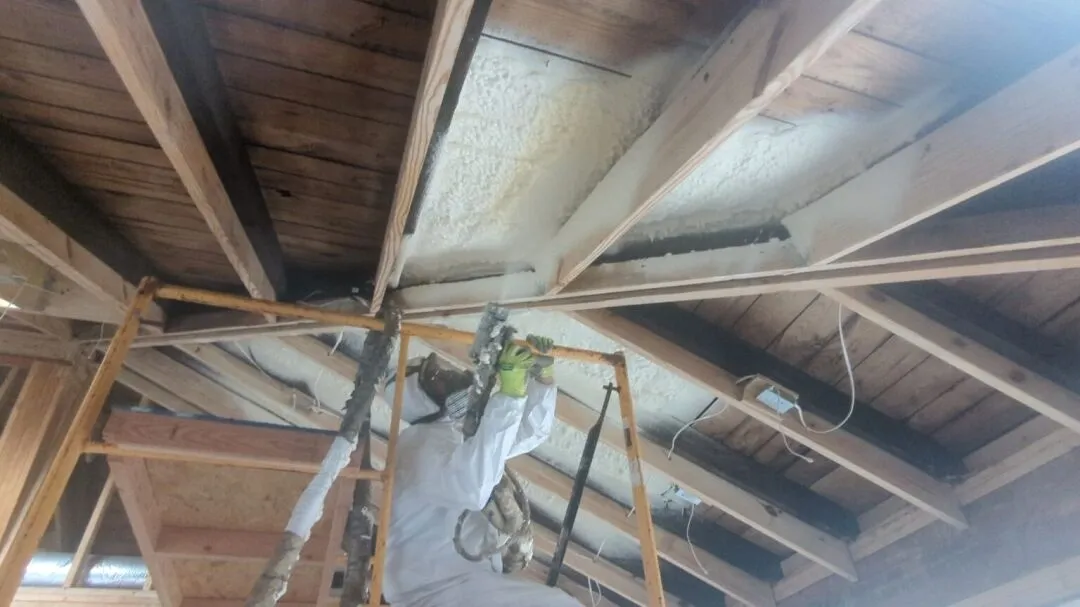
Spray foam insulation offers an effective solution for sealing gaps and improving insulation performance. It expands during installation, which helps fill small openings that other insulation types may miss.
We often recommend spray foam insulation for targeted areas where air movement contributes to comfort issues. Spray foam can also support moisture control when used as part of a comprehensive insulation plan.
Attic insulation doesn’t always work on its own. Moisture conditions in crawl spaces can influence attic performance. When humidity rises in a home, it can affect the effectiveness of insulation and indoor comfort.
We offer crawl space encapsulation, vapor barriers, and moisture control solutions to support attic insulation upgrades. When we address moisture issues alongside insulation improvements, homeowners often experience better long-term results.
One of the most noticeable benefits of attic insulation upgrades is improved comfort. Homeowners often tell us they notice more consistent temperatures shortly after insulation improvements.
Attic insulation helps reduce temperature swings by slowing heat transfer. During warmer months, it helps limit heat entering the home from above. During colder months, it helps retain conditioned air inside.
These improvements can help reduce hot and cold spots, especially in upper-level rooms. Many homeowners also notice that their HVAC systems run more efficiently after insulation upgrades.
Energy efficiency remains one of the main reasons homeowners upgrade attic insulation. When insulation levels improve and air movement decreases, heating and cooling systems don’t have to work as hard.
This can lead to lower energy bills and improved system performance. Over time, better insulation can also help reduce wear on HVAC equipment by allowing systems to operate more efficiently.
Our goal is to help homeowners create an energy-efficient environment that provides year-round comfort.
Attic insulation upgrades can also support indoor air quality. When air movement between the attic and the living space decreases, fewer airborne particles enter the home.
This can help reduce dust and improve overall air quality. When combined with moisture control solutions, insulation upgrades can help create a healthier indoor environment.
We often recommend addressing moisture and insulation together to improve indoor air quality.
Homes in Jordan on the James and Prince George Estates often share similar construction styles, but each home still has unique features. Roof design, attic layout, and ventilation all influence insulation performance.
We tailor our insulation recommendations to match each home’s layout and performance goals. This personalized approach helps ensure that insulation upgrades provide meaningful improvements. We also consider long-term durability. Our insulation solutions are designed to support comfort and efficiency for years to come.
Since the beginning, we’ve helped homeowners across Prince George, VA, and the surrounding areas improve comfort and energy efficiency. Our experience with insulation and moisture control allows us to recommend solutions that align with each home’s needs.
We focus on clear communication and practical recommendations. Our goal is to help homeowners understand their options and choose insulation solutions that support long-term comfort.
We also offer free estimates and consultations. This allows homeowners to explore insulation upgrades and understand how improvements can benefit their home.
Attic insulation plays a major role in how new homes perform. Even in brand-new construction, insulation upgrades can improve comfort, reduce energy use, and support indoor air quality.
At Vance Insulation & DryGuard Systems, we help homeowners in Jordan on the James and Prince George Estates improve attic performance with insulation solutions tailored to their homes. By focusing on insulation, moisture control, and air movement, we help create comfortable and energy-efficient spaces designed for long-term performance.
Yes. Attic insulation upgrades can help reduce heat loss and improve HVAC efficiency. When insulation and air sealing work together, your heating and cooling system doesn’t have to run as often, which can help lower energy costs and improve indoor comfort.
Even new homes can benefit from attic insulation upgrades. If you notice uneven temperatures, higher energy bills, or rooms that feel too warm or too cool, your attic insulation may need improvement. We evaluate insulation coverage, air movement, and moisture conditions to determine whether upgrades can improve comfort and efficiency.
The best insulation depends on your attic layout and performance goals. We commonly install fiberglass, blown-in, and spray foam insulation. Each option offers distinct benefits, and we recommend the solution that best fits your home’s design and energy-efficiency needs.
Address: 3922 Puddledock Rd, Prince George, VA 23875
Phone: 804-862-4493
Business Hours:
Mon - Fri: 7:00 AM to 6:30 PM
Sat-Sun: Closed
GreenSky Financing
5% off Military, Veteran, First Responders
